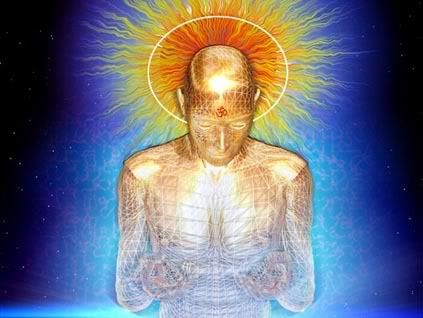
Om tryambakaṃ yajāmahe sugandhiṃ puṣṭi-vardhanam
urvārukam iva bandhanān mṛtyormukṣīya māmṛtāt
Who is Shiva? What are the origins of this mighty god in Hindu religion and what are the different facets of His personality? In this post, let us try to analyze this enigmatic god and learn what it means to be the Lord of Destruction..
Shiva, the Destroyer
As mentioned in the Page {33 Devas} of this blog, Lord Shiv, along with Prajapati Brahma and Shri Hari Vishnu, forms a part of
the highest echelons of the hierarchy amongst Gods known as the Trimurti. All three fit into the scheme of things perfectly with their respective roles being coplimentary to each other.
- Brahma, the First in the Trinity, is the Creator and Master of all Divine Ceremonies.
- Vishnu, the Preserver god who incarnates to help mankind face the challenges posed whenever Evil forces become too dominant in the Universe.
- Shiva, destroys at the End of Time and thus sustains the endless rhythm of the Universe ensuring a continuous cycle of renewal and growth.
Mahadev-Shiv-Pashupati-Rudra

In their mistaken belief, some scholars argue that Shiva had a pre-Aryan
origin because he was worshiped in the Indus Valley. But, as mentioned
in the page {Hindu History}
of the blog, the Aryan Civilization, if not earlier, was
at the very least contemporary to the Indus-Saraswati Civilization and Vedic scriptures, more likely than not, reflect the literally aspect of the same.
That the Mahabharat follows the Indus perception of Shiva again shows that the two developed same imagery and that this penultimate battle between Good and Evil occurred around the same time as the Indus-Saraswati Civilization! In an article titled {The Riddle of India's Ancient Past}, the French proto-historian Michel Danino believes there are strong links between Vedas and the Harappan culture.
'We find statues and seals depicting yogis and yogic postures, we find a Shiva-like deity, worship of a mother-goddess, fire altars, all of which are suggestive of Vedic culture. Harappan symbols include the Trishul, the Swastika, the Conch shell, the Peepal tree, all of which are central to Indian culture. The Rig-Veda itself is full of references to fortified cities and towns, to oceans, sailing, trade and industry, all of which are found in the Harappan civilization.'
Pashupati Seal from Indus-Saraswati excavations

As you probably know from my other posts, I love to find out the similarities between the mythologies from different parts of the world. Keeping up with the tradition, I here share with you the image of the horned god Cernunnos worshiped in Europe around 1st century CE.
The Horned Gods - Pashupati & Cernunnos

Just like Shiva, Cernunnos is believed to be the god of Nature and Fertililty and is still revered in Celtic mythology as the 'Lord of Animals' (quite similar to the Indus Pashupati!). Whatever the connection between the two, it is not easy to understand Shiva completely as he is described variously at various places with completely opposite attributes.
In Yajurveda, the contrary attributes are referred to as Rudra, the terrifying and Shiva, the auspicious (Sanskrit Shiv = Shubh). Some scholars believe Rudra to be the older form which was merged later with a 'Non-Aryan' god Shiva or Pashupati in later times. But do the scriptures support such a hypothesis?
Shiva, the Consummate Yogi
 Rudra, the Destroyer of Creation


{Image courtesy - Devon ke dev, Mahadev}
Shiva or Rudra?
As I had earlier mentioned in the post {Creation by Brahma}, inspite of Brahma's efforts at populating the world, the early sons of Brahma chose to follow the path of Spirituality instead of procreation and Brahma was sorely disappointed. His first creations, the Sanat Kumars, in fact abhorred entering the Samsar Chakra so much that they continue living the form of 5 year old kids and never attain puberty!
This, however, frustrated Brahma so much that from his forehead, (the region of the third eye) emerged a dark red/blue child bawling at the top of his voice. This angry baby was named Rudra (The Howler)!
Rudra born from Brahma's Frown

However, Rudra, was more spiritually inclined than Brahma, and decided to follow the path of Tapas
or Penance and thus entered samadhi in the Garbhodak Ocean. It was only after a lot of cajoling and praying
by Brahma, that He agreed to help in procreation and manifested 10 more beings with the
same appearance as him (Binary Fission?!?). These are the 11
Rudras, and Rig Veda [2.33], describes Shiv as the Father-of-All-Rudras.
Thus, we see, that the scriptures find NO difference between Rudra and Shiva except that the first term encompasses eleven gods, the First and Foremost of whom is Lord Shiv. Therefore, the hypothesis that Shiva was a non-Aryan god who was merged with Rudra is baseless.
Thus, we see, that the scriptures find NO difference between Rudra and Shiva except that the first term encompasses eleven gods, the First and Foremost of whom is Lord Shiv. Therefore, the hypothesis that Shiva was a non-Aryan god who was merged with Rudra is baseless.
Lord Shiv with the Rudras


As regards the three-eyes, it is interesting to note that the Pineal gland in Human beings is located at the region of the Third-Eye and has tissue similar to that of the normal functioning eye. Indeed the gland in many vertebrates has cells similar to the photoreceptors of eye used for vision! Could it then be another vestigial organ that we humans possessed earlier but now has a very limited value??
The Deep Seated Third Eye

Shiva, the only being with a Completely functional Pineal Gland?

Lord Shiv, then would be the most ancient progenitor of our race in whom the organ functions as it should. But Brahma got terrified of these three-eyed fierce forms and requested Lord Shiva to create a more benign aspect of Himself and that is how Shakti was given a form!
Shiva and Shakti
Rudra, thus took the form of Ardhanarishwar and generated a female principle from His left half who was the Rudrani. Each of the 11 Rudras similarly obtained a consort thus providing Brahma some satisfaction of
seeing his creations multiply. Shiva's consort Uma or Shakti is the primeval Goddess who also represents the Yogmaya of Lord Vishnu.
Lord as Ardha-naarishwar

The festival of Mahashivaratri marks the night when Lord Shiv was married to Parvati, the final form of Uma who was earlier born as Daksha's daughter Sati.
The union of Shiva and Shakti is represented symbolically in the form of the Lingam and the Yoni. It symbolizes Hieros-gamos or the 'Sacred Union' between God and the Goddess that gives birth to creation. It is yet another tribute to the ancient Indians' acceptance of the sexual act as a natural phenomenon and one that needs to be worshiped and not abhorred.
The same union is celebrated in Tibetan Tantrism where it is referred to as Yab-Yum (Father-Mother). Shiva is depicted here as Yamantaka or End-of-Yama revealing the episode when He rescued Rishi Markandeya from Yamdev's noose literally at gun-point (Trident point if you please!).
While both Shiva and Shakti represent the Male and Female forms, their vehicles also represent their innate attributes. Shiva's vehicle Nandi, the bull, represents magnificence, virility and proud masculinity while Parvati's vehicle, the mountain Lion or Singh represents her Power or Shakti and the taming of animal instincts by the Mother Goddess.
Archaeologically, we find this reflected in the Zebu bull seals of Indus-Saraswati Civilization (which may represent Nandi) and surprise, surprise, in a far-off valley in Turkey known as Yazili Kaya! The rock-cut friezes in these caves belong to 16th-17th century BCE and show a God Teshub riding a bull, while the accompanying Goddess Hepat rides a Lion and is accompanied by a young boy Kumarbi (Kumar Kartikeya?).


The worship of Shiva and Shakti thus represents an ancient rite of recognizing the Universe as a balance of the Male and the Female, the Doer and the Energy, the Yin and the Yang and the Yab and the Yum. The night of their union or Mahashivratri is also believed to be the night when Shiva appeared in the form of a Lingam of Fire and challenged the gods Brahma and Vishnu's contest for supremacy. That was the night Lord Vishnu's magnanimity came to fore while Brahma's cheating led to Shiva putting the curse that he would never be worshiped. The Somnath Temple in Gujarat commemorates this very occasion!

We see now a reason why Shiva would have invoked belligerence in his father-in-law Daksha Prajapati. After all, Daksha was the eldest Manas-putra of Brahma and could not have taken kindly to this denigration of his father's position from the Head-of-the-Trinity to its bottom! Perhaps, that was also the reason, that he balked at the idea of his most favored daughter Sati, falling in love with the man he so heartily despised!!
Sati did eventually marry Lord Shiv against her father's wishes and ultimately sacrificed herself in the Yagnya fire at Kankhal, Haridwar to protect her husband's honor. Shiva carries the corpse of Sati on His shoulder lamenting His loss till Lord Vishnu uses His Chakra to disintegrate the body. Each part of the body falling on Earth provides a Divine foundation and thus are formed the 51 Shaktipeeths (Seats-of-Energy)!
This incident shows that Shiva and Vishnu work in tandem too and their Oneness-in-Duality is also seen in the combined form of Vishnu (Hari) and Shiva (Har) that depicts both deities as two faces of the same coin working hand-in-hand to ensure smooth functioning of the Universe.
The story shows a completely new side of Shiva where the Supreme Master-of-Senses loses control and decides to take revenge by beheading Daksha!
Shiva with His beloved Sati in happier times


The union of Shiva and Shakti is represented symbolically in the form of the Lingam and the Yoni. It symbolizes Hieros-gamos or the 'Sacred Union' between God and the Goddess that gives birth to creation. It is yet another tribute to the ancient Indians' acceptance of the sexual act as a natural phenomenon and one that needs to be worshiped and not abhorred.
The same union is celebrated in Tibetan Tantrism where it is referred to as Yab-Yum (Father-Mother). Shiva is depicted here as Yamantaka or End-of-Yama revealing the episode when He rescued Rishi Markandeya from Yamdev's noose literally at gun-point (Trident point if you please!).
Yamantaka Shiva in Yab-Yum formation


Archaeologically, we find this reflected in the Zebu bull seals of Indus-Saraswati Civilization (which may represent Nandi) and surprise, surprise, in a far-off valley in Turkey known as Yazili Kaya! The rock-cut friezes in these caves belong to 16th-17th century BCE and show a God Teshub riding a bull, while the accompanying Goddess Hepat rides a Lion and is accompanied by a young boy Kumarbi (Kumar Kartikeya?).
Zebu Bull from Harrapan seals

Yazili Kaya rock-cut frieze with God on Bull and Goddess on Lion

My visit to the Somnath Temple

Sati did eventually marry Lord Shiv against her father's wishes and ultimately sacrificed herself in the Yagnya fire at Kankhal, Haridwar to protect her husband's honor. Shiva carries the corpse of Sati on His shoulder lamenting His loss till Lord Vishnu uses His Chakra to disintegrate the body. Each part of the body falling on Earth provides a Divine foundation and thus are formed the 51 Shaktipeeths (Seats-of-Energy)!
This incident shows that Shiva and Vishnu work in tandem too and their Oneness-in-Duality is also seen in the combined form of Vishnu (Hari) and Shiva (Har) that depicts both deities as two faces of the same coin working hand-in-hand to ensure smooth functioning of the Universe.
Hari-Hara the Divine combination of Lord Vishnu and Lord Shiva


The story shows a completely new side of Shiva where the Supreme Master-of-Senses loses control and decides to take revenge by beheading Daksha!
Virbhadra, born from Shiva's locks beheads Daksha

Virbhadra statue carved out of rock at Kailash Temple, Ellora

Kailash, the Abode of Shiva
Satellite Image of Mt. Kailash with Mansarovar and Rakshas Taal

Catching a glimpse of the Holy Mountain

Jains worship the region as their First Tirthankar, Rishabhdev attained Nirvana here (Check the post {India and Bharat} for more on Adinath Rishabhdev). Tibetan Buddhists worship Mount Kailash as the home of the Buddha Demchok or Chakrasamvara, who represents supreme bliss.
The followers of Bön religion credit the entire region, especially Kailash, as the seat of all spiritual power. Indeed the area gives one a feeling of entering a more spiritual plane especially when you see mountain peaks like that of the Om Parvat.
View of the Om Parvat en route to Mount Kailash

Inspite of numerous references to it, the readers might be surprised to know, that Kailash was not always the home of Shiva! Infact, some passages of the Shrimad Bhagvat Puraan state that the original abode of Sadashiv is at the boundary of this Universe at the Loka-aloka border!
The Original Abode of Lord Shiv

These verses in the Vayu Puraan, Chapter 39 shed more light on the details of this place:
[230]
Beyond Brahmaloka and beneath the upper crust of the Cosmic Egg – in
between these two is Shiva’s city, his divine abode called MANOMAYA.
[238] The city shines with scattered diamond dust. These worlds are lit from within, meaning their reality does not consist of reflected light, as does our material world.
[264-266] Lord Maheshwar [the transcendent Lord Shiv] of ten arms sports therein… He is respected and diligently worshiped by the people moving about in aerial chariots.
This, then is the Original and Supreme abode of Shiva where He resides till the end of Creation and is visited by the other gods in their space-crafts {Check the post Lokas or Alien Planets for more on this topic}. Kailash may actually be the temporary home where the Lord comes for a small time, maybe as a summer-retreat!
Shiva Family on Mount Kailash

This would also make sense, since geologically, the Himalayas (of which Mount Kailash is a part), did not rise up till about 5o million years ago!
Since Hindu Timelines begin close to 155 Trillion years (the present age of Brahma), hence, obviously Lord Shiv would have had to live somewhere else before finally making Kailash His home!! Also, the Himalayas wont stay forever as the Pralaya or the End-of-the-World would destroy the World as we know it and Brahma would then remould it into a new shape.
At that time, Shiva would probably return to the abode known as Manomaya with His family and Kailash may or may not come into being again.
Naimittik Pralaya
The
destruction that takes place at the end of a daytime of Brahma is
referred to as Naimittik, implying incidental or occasional opposed to Prakritik Pralaya that takes place at the end of Brahma's lifetime. {Check the post - Pralaya, the End of Days for more on this}
The characteristic of this destruction is that the three worlds (Bhur, Bhuvah and Swarga) continue to exist but are made uninhabitable. The souls of individuals also continue to exist to be reincarnated in the next daytime of Brahma.
The Shiv Purana [2.3.20.14-19] states that the fall off of the energy residing in the THIRD EYE of Shiva fell like lightning and Brahma had to take it to the ocean and keep it under check there else it could burn the entire creation!
The energy thus released was stored underwater in the shape of a mare and is known as the Vadava {Check this link for details - On Wings of Fire}. The fire-mare resides under the ocean (Molten Earth's core?) and one of the myths calls her wife of Yama and hence a harbinger of Death.
The characteristic of this destruction is that the three worlds (Bhur, Bhuvah and Swarga) continue to exist but are made uninhabitable. The souls of individuals also continue to exist to be reincarnated in the next daytime of Brahma.
The Shiv Purana [2.3.20.14-19] states that the fall off of the energy residing in the THIRD EYE of Shiva fell like lightning and Brahma had to take it to the ocean and keep it under check there else it could burn the entire creation!
The energy thus released was stored underwater in the shape of a mare and is known as the Vadava {Check this link for details - On Wings of Fire}. The fire-mare resides under the ocean (Molten Earth's core?) and one of the myths calls her wife of Yama and hence a harbinger of Death.
Vadava Fire hidden below the Oceans

Submarine Volcanoes - Flames of the Vadava Fire?
Eruption of an Underwater Volcano
Eruption of an Underwater Volcano

Normally, the fire is kept in check with the waters of the Global Ocean. But as Mahabharat
verses [12.248.13-17] state, the end of the Day of Brahma is nigh that
Rudra sparks off the fire again and this explosion from the
mare's mouth in the Southern Ocean begins the process of Pralaya.
Vishnu Purana [1.7.24-40] also agrees that this
destruction would begin with an underwater explosion and shall be succeeded by a 100 year drought during which the seas, rivers, and streams will all be drained of water. The sun would be replaced by seven suns (will our Sun increase in size?), and the three worlds as well as the underworlds shall be burned bare of life. This then, is the Final Destiny of our planet and this is what we call Tandav, the Final Dance of Shiva. As each atom is created, another is destroyed and this continues forever in a cyclical manner.
Shiva dancing the Dance of Destruction at Elephanta Caves

Shiva drinks poison to save Life yet also annihilates at the End of Time
.JPG)
- Om tryambakaṃ yajāmahe sugandhiṃ puṣṭi-vardhanam
- urvārukam iva bandhanān mṛtyormukṣīya māmṛtāt
OM, We worship Shiva, the Three-eyed fragrant Lord,
Who nourishes and nurtures all beings,
As is the ripened cucumber freed from its bondage (to the creeper),
May He liberate us from Death and take us to Immortality.
Aum Shanti: Shanti: Shanti: